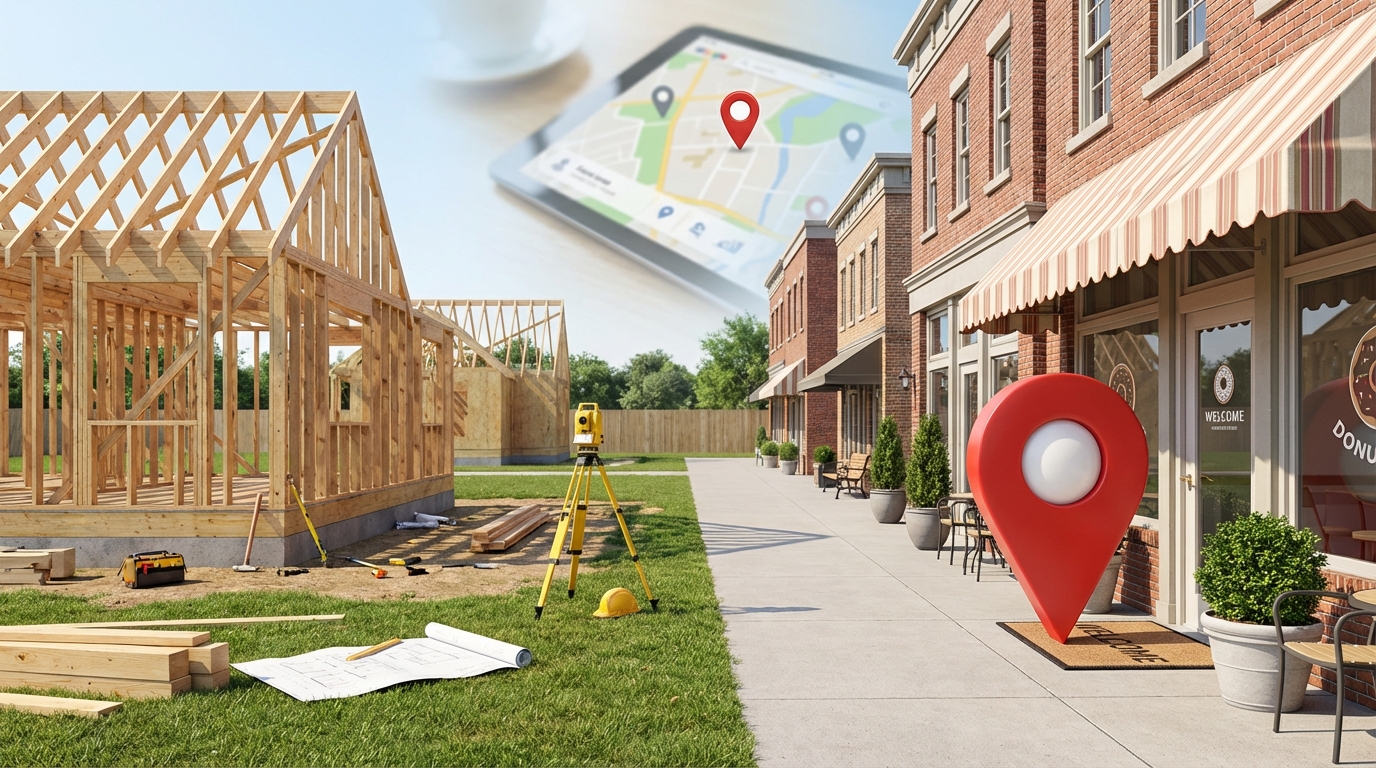
Google Business Profiles are the foundation of local visibility, but they're worthless without a complete visibility strategy backing them up. Your profile is just the front door - you need the entire house built correctly to turn searchers into customers.
Most business owners treat their Google Business Profile like a digital business card. They fill out the basics and wonder why leads aren't pouring in. The truth is simpler: your profile is one piece of a larger puzzle that includes your website, content strategy, and systematic approach to building authority online.
Why Google Business Profiles Can't Work Alone
Your Google Business Profile shows up when someone searches for your business type near them. That's powerful. But what happens when they click through to your website and find three outdated pages with no real information?
Here's the reality: 78% of people consume multiple pieces of content before making a buying decision. Your Google Business Profile might be their first touchpoint, but it won't be their last. They'll visit your website, read reviews, maybe check out your social media, and possibly even call competitors.
Without a complete visibility strategy, you're sending qualified traffic to a dead end. Your profile becomes a leaky bucket - bringing people to your door but not converting them into customers.
The Complete Local Visibility Framework
The most effective approach treats your Google Business Profile as part of a three-layer visibility system:
Layer 1: Discovery (Google Business Profile + Local SEO)
Your Google Business Profile gets people to notice you exist. But it needs support from local citations, consistent NAP (Name, Address, Phone) information across directories, and location-based content on your website.
Think of this layer as your digital storefront. It needs to look professional, provide clear information, and give people a reason to learn more about what you do.
Layer 2: Education (Website + Content Strategy)
Once someone finds you, they need to understand why you're different. This is where your website and content strategy take over. Your site should answer their questions, demonstrate your expertise, and guide them toward the next step.
Most businesses fail here because they create generic content that could describe any company in their industry. Your content needs to solve specific problems your ideal customers face, not just talk about your services.
Layer 3: Conversion (Lead Magnets + Follow-up Systems)
The final layer captures interest and turns it into conversations. This includes lead magnets that provide immediate value, email sequences that nurture prospects, and clear calls-to-action that make it easy to get in touch.
Without this layer, you're relying on people to remember you when they're ready to buy. That's a losing strategy in competitive markets.
How to Optimize Your Google Business Profile Within This Framework
Your Google Business Profile optimization should support your larger visibility goals, not work in isolation. Here's how to set it up correctly:
Choose Categories That Match Your Content Strategy
Don't just pick the most obvious category. Choose categories that align with the problems you solve and the content you create. If you're a contractor who specializes in kitchen remodeling, don't just select "General Contractor" - add "Kitchen Remodeler" as your primary category.
Your categories should match the keywords you're targeting on your website. This creates consistency across all your digital properties and helps Google understand exactly what you do.
Write Descriptions That Connect to Your Website
Your business description shouldn't just list services. It should hint at the value you provide and encourage people to visit your website for more information. Use language that matches your ideal customer's search terms and problems.
For example, instead of "We provide plumbing services," try "We fix emergency plumbing problems fast, so you don't have to deal with water damage or expensive repairs."
Use Posts to Drive Website Traffic
Google Business Profile posts disappear after seven days, but they're visible in search results while they're active. Use them to promote new content on your website, share customer success stories, or highlight specific services.
Each post should have a clear call-to-action that sends people to a relevant page on your website. Don't just announce things - give people a reason to click through.
Common Mistakes That Sabotage Local Visibility
The biggest mistake is treating each piece of your visibility strategy as separate. Your Google Business Profile, website, and content should work together, not compete for attention.
Inconsistent Messaging Across Platforms
If your Google Business Profile says you're a "full-service marketing agency" but your website focuses on web design, you're confusing potential customers. Pick one primary message and use it everywhere.
Optimizing for Vanity Metrics
More profile views don't matter if they're not converting. Focus on getting the right people to your profile, not just more people. Quality beats quantity every time.
Ignoring the Customer Journey
People don't go from Google search to hiring you in one step. They need multiple touchpoints, social proof, and clear information about what working with you looks like. Plan for this journey instead of hoping for instant conversions.
Building Authority That Supports Your Profile
Your Google Business Profile gains credibility when it's backed by a strong online presence. This means creating content that demonstrates your expertise, earning reviews that highlight specific results, and building citations from relevant local sources.
Content That Builds Local Authority
Create content that solves problems specific to your local market. If you're a landscaper in Phoenix, write about desert landscaping challenges. If you're an accountant in Seattle, address tax issues specific to Washington state businesses.
This type of content helps your website rank for local searches and gives your Google Business Profile more authority in Google's eyes. It also provides valuable information you can reference in your profile posts.
Strategic Review Generation
Reviews on your Google Business Profile should tell a story about the specific value you provide. Instead of asking for generic reviews, ask satisfied customers to mention the specific problem you solved or result you delivered.
These detailed reviews become social proof that supports your positioning and helps potential customers understand exactly what you do.
Measuring What Actually Matters
Track metrics that connect to business results, not just profile activity. The most important metrics are:
- Website traffic from Google Business Profile: How many people click through to your site?
- Conversion rate of that traffic: How many become leads or customers?
- Search queries that trigger your profile: Are you showing up for the right searches?
- Actions taken on your profile: Are people calling, visiting, or requesting directions?
These metrics tell you whether your profile is actually supporting your business goals or just generating meaningless activity.
The Long-Term Visibility Strategy
Building sustainable local visibility takes time, but it compounds. Every piece of content you create, every review you earn, and every citation you build adds to your overall authority.
The businesses that win long-term don't rely on quick fixes or algorithm hacks. They build comprehensive visibility strategies that work regardless of platform changes or competitive pressure.
Creating Content That Lasts
Focus on evergreen content that stays relevant over time. Answer the questions your customers ask repeatedly. Solve the problems that don't change with trends or seasons.
This content continues attracting visitors and supporting your Google Business Profile long after you publish it. It's an asset that keeps working while you focus on serving customers.
Building Systematic Authority
Authority isn't built through individual tactics - it's built through consistent execution of a complete strategy. Your Google Business Profile, website content, local citations, and customer experience should all reinforce the same message about who you serve and how you help them.
Frequently Asked Questions
Should I focus on my Google Business Profile or my website first?
Start with your website foundation, then optimize your Google Business Profile to drive traffic there. Your profile is only as strong as the experience people have when they click through to your site.
How often should I post on my Google Business Profile?
Post weekly with content that promotes your website or highlights customer results. Consistency matters more than frequency - pick a schedule you can maintain long-term.
Do I need professional help to manage local visibility?
If you're spending more than 5 hours per week on marketing activities without seeing clear results, professional help will likely save you time and money while delivering better outcomes.
How long does it take to see results from local visibility efforts?
Expect 3-6 months for meaningful improvements in search visibility and lead generation. Quick wins are possible with profile optimization, but sustainable results require consistent effort over time.
Can I succeed with just Google Business Profile optimization?
Profile optimization alone rarely generates enough leads to sustain a business. You need supporting website content, clear conversion paths, and systematic follow-up to turn visibility into revenue.
What's the biggest mistake businesses make with local visibility?
Treating each platform separately instead of creating an integrated strategy. Your Google Business Profile, website, and content should work together to guide prospects through your customer journey.
Your Google Business Profile is a powerful tool, but it's just one piece of a complete visibility strategy. The businesses that thrive online understand this connection and build systems that turn searchers into customers consistently.
Success comes from treating your digital marketing strategy as an integrated system, not a collection of separate tactics. When your Google Business Profile, website content, and conversion systems work together, you create a visibility strategy that generates leads and builds long-term business growth.